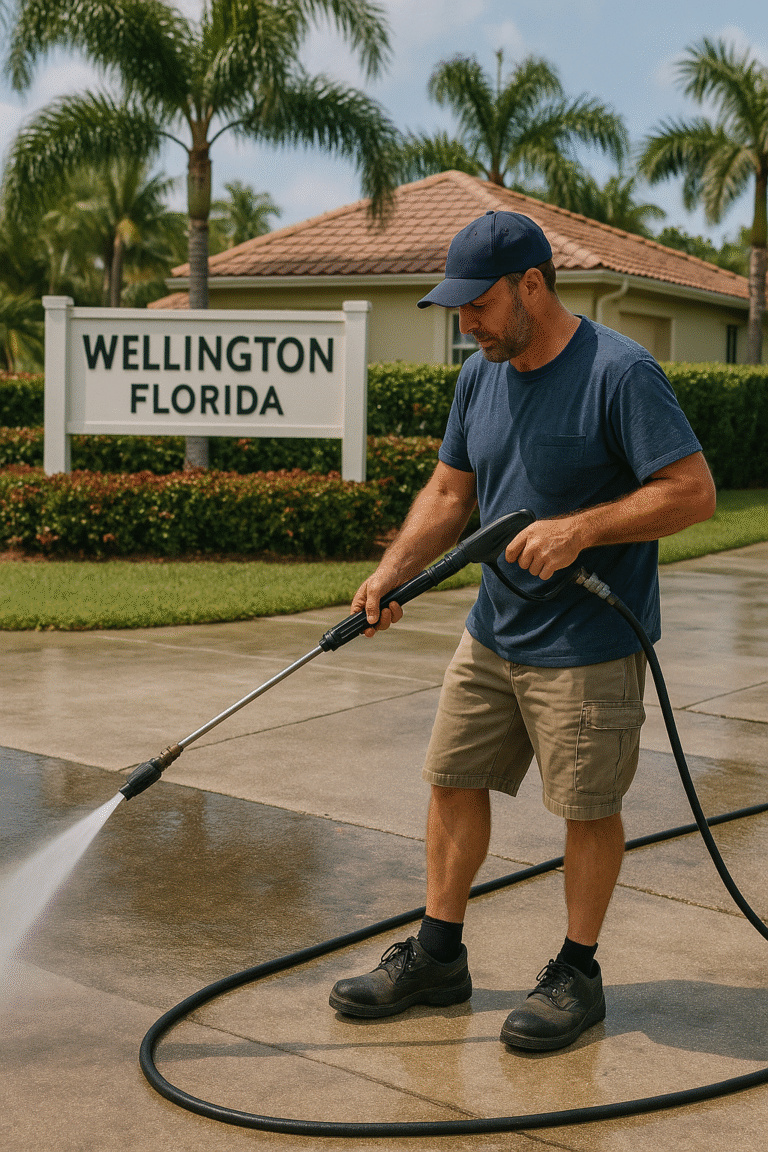
Driveway and Sidewalk Cleaning Requirements in Wellington
Don’t Risk Code Violations: Your Legal Guide to Driveway and Sidewalk Cleaning Requirements in Wellington, Florida
Protect your property and avoid costly fines by understanding Wellington’s mandatory cleaning compliance standards
Introduction: Why Driveway and Sidewalk Cleaning Maintenance Isn’t Optional in Wellington
As a Wellington homeowner, you might think that cleaning your driveway and sidewalks is simply a matter of curb appeal. However, many residents don’t realize that maintaining these surfaces isn’t just recommended—it’s legally required. The Village of Wellington’s Code Compliance Division actively enforces property maintenance standards that include keeping driveways and sidewalks free from stains, discolorations, mold, and debris.
Failing to meet these requirements can result in code violations, escalating fines, and even property liens. With Wellington’s humid climate promoting rapid mold and algae growth, understanding your legal obligations for driveway and sidewalk maintenance is crucial for avoiding costly compliance issues.
Understanding Wellington’s Code Enforcement Authority Driveway and Sidewalk Cleaning
The Legal Framework Behind Property Maintenance Requirements
Wellington’s Code Compliance Division operates under the authority of local ordinances and Florida state law to maintain community standards. Their mission is clear: to provide “accurate, fair, effective, and expeditious code enforcement” while protecting the health, safety, and welfare of all residents through enforcement of Wellington codes and property maintenance standards.
The division has the legal authority to issue violations for properties that don’t meet established maintenance standards, including requirements for clean driveways and sidewalks. This isn’t just about aesthetics—it’s about public safety, property values, and community welfare.
Recent Legal Changes Affecting Code Enforcement
Florida Senate Bill 60, effective July 1, 2021, brought significant changes to code enforcement procedures. While this bill now requires complainants to provide their name and address (ending anonymous complaints), it doesn’t reduce the enforcement authority for violations that pose threats to public health, safety, or welfare. Stained, moldy, or deteriorating driveways and sidewalks can fall into this category, especially when they create slip hazards or harbor harmful bacteria.
Specific Legal Requirements for Driveway and Sidewalk Cleaning and Maintenance
What Constitutes a Code Violation
According to Wellington’s property maintenance standards and enforcement practices, several conditions can trigger code violations related to Driveway and Sidewalk Cleaning:
Stains and Discolorations: Oil stains, paint spills, rust marks, and other discolorations that detract from property appearance are considered violations. These stains must be removed promptly to maintain compliance.
Mold and Algae Growth: Wellington’s humid climate creates ideal conditions for mold and algae growth on concrete surfaces. Black, green, or brown discoloration from biological growth is not only unsightly but can create slip hazards, making it a safety violation.
Debris and Obstructions: Keeping driveways and sidewalks free from debris, equipment, and other obstructions is mandatory. This includes ensuring proper drainage to prevent standing water.
Structural Deterioration: Cracked, crumbling, or damaged surfaces that pose safety hazards or allow vegetation growth must be repaired or replaced.
Palm Beach County Ordinance Compliance
As part of Palm Beach County, Wellington properties must also comply with county-level Driveway and Sidewalk Cleaning maintenance ordinances. Under Palm Beach County Code § 106-156, property owners are legally responsible for keeping sidewalks abutting their property free of debris, obstructions, and encumbrances. This includes cleaning dirt, mold, algae, and any objects that could create hazards or impede pedestrian movement.
The county’s enforcement authority allows for civil penalties up to $500 per violation, with provisions for increased fines for repeat violations. These penalties can escalate quickly, making proactive maintenance far more cost-effective than reactive compliance.
The Violation Process: What Happens When You Don’t Comply
Initial Notice and Compliance Timeline
When a code violation is identified—either through routine inspection or resident complaint—property owners receive a formal notice of violation. This notice specifies:
- The exact nature of the violation
- Required corrective actions
- Deadline for compliance (typically 10-30 days depending on the violation)
- Consequences of non-compliance
It’s crucial to understand that this initial notice is not optional. The violation must be addressed within the specified timeframe, or escalating consequences will follow.
Escalating Consequences for Non-Compliance
Special Magistrate Hearings: Failure to correct violations within the prescribed timeframe results in cases proceeding to the Special Magistrate. This is a formal legal proceeding where evidence is presented and fines can be imposed.
Daily Fines: Recent enforcement actions in Wellington have included daily fines of $25 for property owners who failed to correct violations after initial compliance deadlines. These fines continue to accrue until the violation is resolved, potentially costing hundreds or thousands of dollars.
Property Liens: Unpaid fines and costs can result in liens being placed against your property. These liens must be satisfied before the property can be sold or refinanced, creating significant financial complications.
Legal Costs: Property owners may also be responsible for administrative costs, inspection fees, and legal expenses associated with enforcement actions.
HOA Requirements: An Additional Layer of Compliance
Understanding Dual Obligations
Many Wellington residents live in communities governed by Homeowners Associations (HOAs), creating dual compliance obligations. While the Village of Wellington enforces municipal codes, HOAs often have additional or more stringent requirements for property maintenance.
Common Property Responsibilities: In many Wellington HOAs, sidewalks along community streets are considered common property maintained by the association. However, driveways and sidewalks directly serving individual properties typically remain the homeowner’s responsibility.
Enhanced Standards: Florida HOAs often maintain cleaning standards that exceed national averages due to the climate. Monthly or quarterly pressure washing of driveways and sidewalks is commonly required to prevent mold, mildew, and stains.
HOA Enforcement Authority: HOAs can impose their own fines and restrictions for maintenance violations, separate from municipal code enforcement. This means homeowners could face penalties from both the HOA and the Village of Wellington for the same maintenance issue.
Inspection Procedures and Violation Documentation
How Code Officers Conduct Inspections
Wellington’s Code Compliance Division conducts both proactive routine inspections and reactive inspections based on complaints. Code officers have the authority to inspect properties from public rights-of-way and may request access to private property when necessary to assess violations.
For help with Pressure Cleaning Please Just Give Us A Call
Photographic Evidence: Violations are documented with photographs showing the specific conditions that constitute non-compliance. This evidence is used in enforcement proceedings and helps property owners understand exactly what needs to be corrected.
Follow-up Inspections: After the compliance deadline, code officers conduct follow-up inspections to verify that violations have been corrected. If violations persist, the case proceeds to formal enforcement action.
Documentation Requirements for Property Owners
When addressing violations, property owners should maintain detailed documentation of corrective actions:
- Before and after photographs
- Receipts for cleaning services or materials
- Correspondence with code officers
- Evidence of ongoing maintenance efforts
This documentation can be crucial if disputes arise or if additional time is needed to complete corrections.
Practical Compliance Strategies for Wellington Homeowners
Preventive Maintenance Schedules
Quarterly Pressure Washing: Given Wellington’s climate, pressure washing driveways and sidewalks every three months helps prevent mold and algae buildup that can lead to violations.
Monthly Inspections: Conduct monthly visual inspections to identify stains, cracks, or other issues before they become code violations.
Immediate Stain Treatment: Address oil stains, paint spills, and other discolorations immediately to prevent permanent damage and potential violations.
Seasonal Deep Cleaning: Schedule comprehensive cleaning before Wellington’s peak inspection periods and after severe weather events.
Professional vs. DIY Maintenance
While homeowners can perform basic cleaning, certain situations may require professional intervention:
Stubborn Stains: Oil stains, rust marks, and embedded dirt may require specialized cleaning products and techniques.
Mold and Algae Removal: Proper mold remediation often requires professional-grade equipment and cleaning solutions.
Surface Repairs: Crack sealing, concrete repair, and surface restoration typically require professional expertise to meet code standards.
Compliance Documentation: Professional services often provide documentation and warranties that can be valuable in demonstrating compliance efforts.
Financial Implications of Non-Compliance
Cost Comparison: Prevention vs. Penalties
The financial impact of code violations extends far beyond the initial cleaning costs:
Preventive Maintenance Costs:
- Quarterly pressure washing: $100-200 per service
- Annual maintenance budget: $400-800
- Professional stain removal: $150-300 per incident
Violation Penalty Costs:
- Initial fines: Up to $500 per violation
- Daily fines: $25 per day until corrected
- Administrative costs: $100-500
- Legal fees: $1,000-5,000 for contested cases
- Property lien complications: Potentially thousands in additional costs
Property Value Impact: Unresolved code violations can negatively impact property values and create complications during real estate transactions.
Insurance and Liability Considerations
Poorly maintained driveways and sidewalks can create liability issues beyond code compliance:
Slip and Fall Liability: Moldy, stained, or damaged surfaces increase the risk of accidents and potential lawsuits.
Insurance Claims: Some insurance policies may not cover claims related to preventable maintenance issues.
Property Condition Disclosures: Code violations must be disclosed in real estate transactions, potentially affecting sale prices and buyer interest.
Working with Wellington’s Code Compliance Division
Communication Best Practices
When dealing with code violations, effective communication with the Code Compliance Division is essential:
Prompt Response: Contact the assigned code officer immediately upon receiving a violation notice to discuss the issue and timeline.
Extension Requests: If additional time is needed due to special circumstances, request extensions before the deadline expires. Code officers often grant reasonable extensions for property owners making good faith efforts to comply.
Documentation Submission: Provide clear evidence of corrective actions, including photographs and receipts, to demonstrate compliance efforts.
Professional Attitude: Maintain respectful, professional communication throughout the process. Code officers are more likely to work with cooperative property owners.
When to Seek Legal Assistance
While most code violations can be resolved through direct communication and corrective action, certain situations may warrant legal consultation:
Disputed Violations: If you believe a violation notice is incorrect or unfair
Excessive Fines: When fines seem disproportionate to the violation
Complex Cases: Involving multiple violations or technical disputes
Property Liens: When liens have been placed against your property
Conclusion: Protecting Your Property and Peace of Mind
Understanding and complying with Wellington’s driveway and sidewalk cleaning requirements isn’t just about avoiding fines—it’s about protecting your property investment, maintaining community standards, and ensuring the safety of your family and neighbors. The legal requirements for property maintenance in Wellington are clear and enforceable, with real financial consequences for non-compliance.
By implementing a proactive maintenance schedule, understanding your legal obligations, and working cooperatively with code enforcement when issues arise, you can avoid the stress and expense of code violations. Remember that the cost of prevention is always less than the cost of penalties, and maintaining clean, safe driveways and sidewalks contributes to the overall quality of life that makes Wellington such a desirable place to live.
Don’t wait for a violation notice to address maintenance issues. Take action now to ensure your property meets Wellington’s standards and protect yourself from costly code enforcement actions. Your proactive approach to compliance will save you money, preserve your property value, and contribute to the community standards that make Wellington a premier residential destination in Palm Beach County.
For specific questions about code compliance requirements or if you’ve received a violation notice, contact Wellington’s Code Compliance Division at 561-753-2560 or submit inquiries through GoWellington. For complex legal matters involving code violations, consider consulting with experienced local attorneys who specialize in municipal code enforcement.